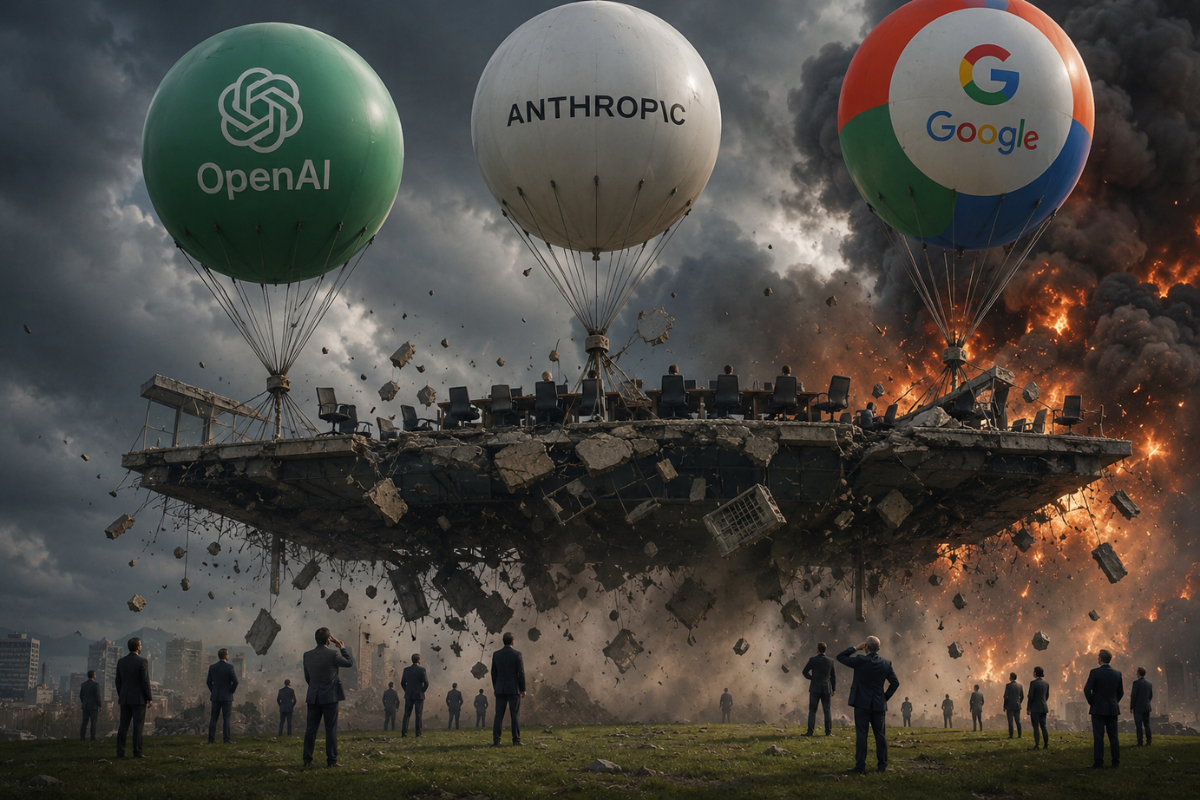
The gap between what companies pay for AI seats and what those seats actually cost to serve is not a margin problem but a chasm, and every organisation that has wired AI into its daily operations at $20-a-head pricing is standing on the wrong side of it.
This should be a board-level conversation, but it is not, because the bill has not landed yet. When it does, the companies that treated AI like permanent cheap electricity are going to find out what their AI transformation actually costs.
The napkin math nobody is doing
Claude Pro is $20 a month, ChatGPT Plus is $20 a month, and that price has not moved in three years. Meanwhile the models got an order of magnitude more capable, agents started running for hours unattended, and the workloads exploded.
Run the API equivalent and the picture changes immediately. Sonnet 4.6 costs $3 per million input tokens and $15 per million output tokens. A knowledge worker doing real work — uploading documents, drafting, analysing, coding — burns through several million tokens a week, which lands at $200 to $400 per seat per month at API rates. The company is paying $20 for the same workload.
The receipts are everywhere. Microsoft was reportedly losing $20 per Copilot user per month, with power users hitting $80 in compute on a $10 subscription. Anthropic users were estimated to consume $8 of compute for every $1 of subscription revenue. OpenAI's own VP of Product has called the subscription model something they “stumbled into” and openly compared unlimited AI plans to unlimited electricity — a thing nobody sells, because it would bankrupt them.
Three years of flat pricing on a product that became radically more capable and radically more compute-hungry is not a pricing strategy, it is a bet that they can lock customers in before the music stops.
Agents broke the model
Chatbot economics were already bad, but agent economics are catastrophic.
When AI was a chat interface, token usage was reasonably predictable — a few thousand here, ten thousand there, manageable even at a loss. Then Claude Code shipped, then agent teams, then parallel instances, and now a single developer running three agents on a refactor burns more tokens in an afternoon than they used to burn in a month.
Users are hitting five-hour rate limits in 90 minutes. GitHub just announced that Copilot moves to usage-based billing on June 1, 2026, explicitly because the flat-fee economics collapsed under agentic workloads. Sam Altman has said OpenAI now needs to become “an AI inference company,” which is a polite way of admitting that the chatbot subscription model does not survive what is coming.
The shift from chat to agent is not 3x more usage, it is an order of magnitude, and the subscription price on that seat has not moved at all.
The exposure no enterprise is measuring
This is where it gets ugly for organisations that have not done the work.
Over the past two years, AI has been stitched into everything from marketing drafts in ChatGPT to engineering work shipping through Claude, alongside research, ops, finance, and customer success, all running on tools that cost less than a Notion seat. A team of 50 on Claude Pro is $1,000 a month, but the same team's actual API consumption, paid at real prices, would land somewhere between $15,000 and $40,000 a month depending on intensity. That is not a budget variance, it is a different line item entirely.
KPMG's Q1 2026 pulse has US enterprises projecting $207M average AI spend over the next 12 months, nearly double last year. Goldman Sachs found that many large companies are already overrunning their AI budgets by orders of magnitude. KPMG's own head of AI labs told Marketplace that nobody was tracking LLM consumption costs even two quarters ago, and an economist at the University of Chicago put it more directly when he said “the time for the bill is going to come.”
The trap is elegant: subsidise, embed, reprice. The dependency built during the cheap years is exactly what makes the expensive years unavoidable.
The IPO is the trigger
There is a specific event that forces all of this, and it is already on the calendar.
OpenAI and Anthropic are both walking toward public markets, with Anthropic crossing $30B in annualised revenue and OpenAI on pace for around $25B. Those numbers look impressive until you look at the cost side, where OpenAI is projecting $115B in cumulative cash burn through 2029 and has committed $665B in compute spending by 2030. Oracle took on $43B in debt in a single fiscal year to build data centres for OpenAI alone.
Private companies can subsidise forever as long as the venture markets keep refilling the tank, but public companies cannot. The moment the S-1 lands, the gap between subscription price and serving cost stops being a growth story and starts being a margin problem, and margin problems get solved by raising prices, capping usage, or moving to consumption billing — all three of which hit existing enterprise contracts.
The repricing has already started
You do not have to forecast this because you can just watch it happen.
GitHub's usage-based billing starts on June 1, Microsoft 365 has raised prices twice in four years with the last increase explicitly attributed to AI infrastructure, and OpenAI's $200 Pro tier alongside Anthropic's $200 Max tier are not premium upsells but the actual price test. Each one is a quiet recalibration of what AI is allowed to cost.
The floor is being raised slowly enough that nobody panics, but steadily enough that by the time finance notices, the workflows are too embedded to unwind.
What to actually do about it
The companies that survive this transition will be the ones that did the work before they had to, which means three things in order.
- Audit real consumption rather than seat count, because you do not know what AI costs your company until you know what your teams actually use — seats are a procurement number, tokens are the truth.
- Model the repricing by running the numbers at 2x, 5x, and 10x current cost, and if 10x breaks the budget, you are not running a strategy, you are running an exposure.
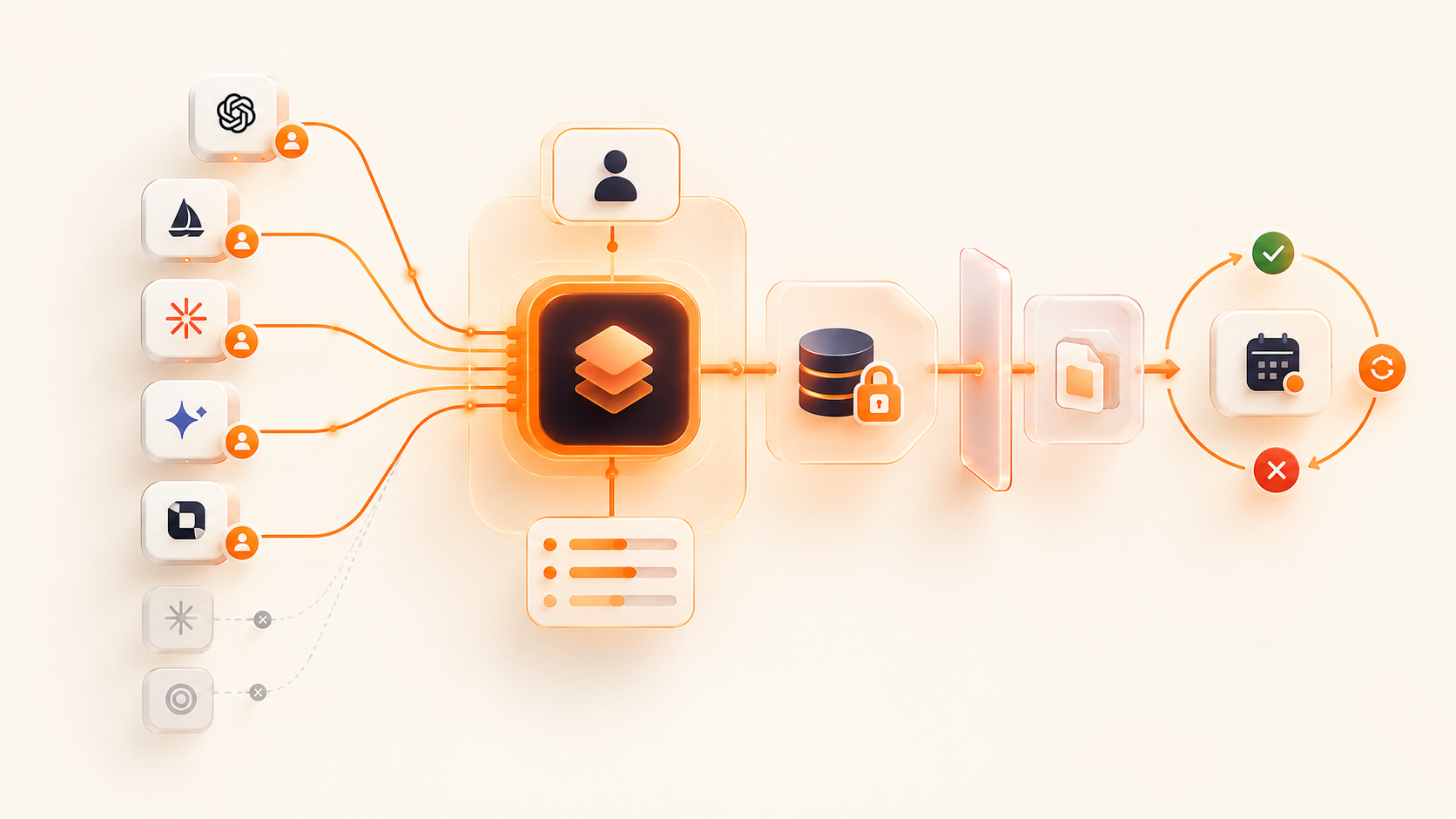
- Build vendor optionality into the stack, because single-provider dependence at subsidised prices is the worst possible position to negotiate from when the prices move.
The deeper move is realising that this is not a procurement problem but an architecture problem. Every company has a tech stack and an org chart, but almost no company has mapped how AI actually flows through both — which tools, which teams, which workflows, and which costs. That map is the only thing that turns the AI bill from a surprise into a plan.
The subsidy era is ending, the clock is running, and most enterprises have not started the conversation. The ones that do it now get to choose their position, and the ones that wait find out what the bill is when it arrives.