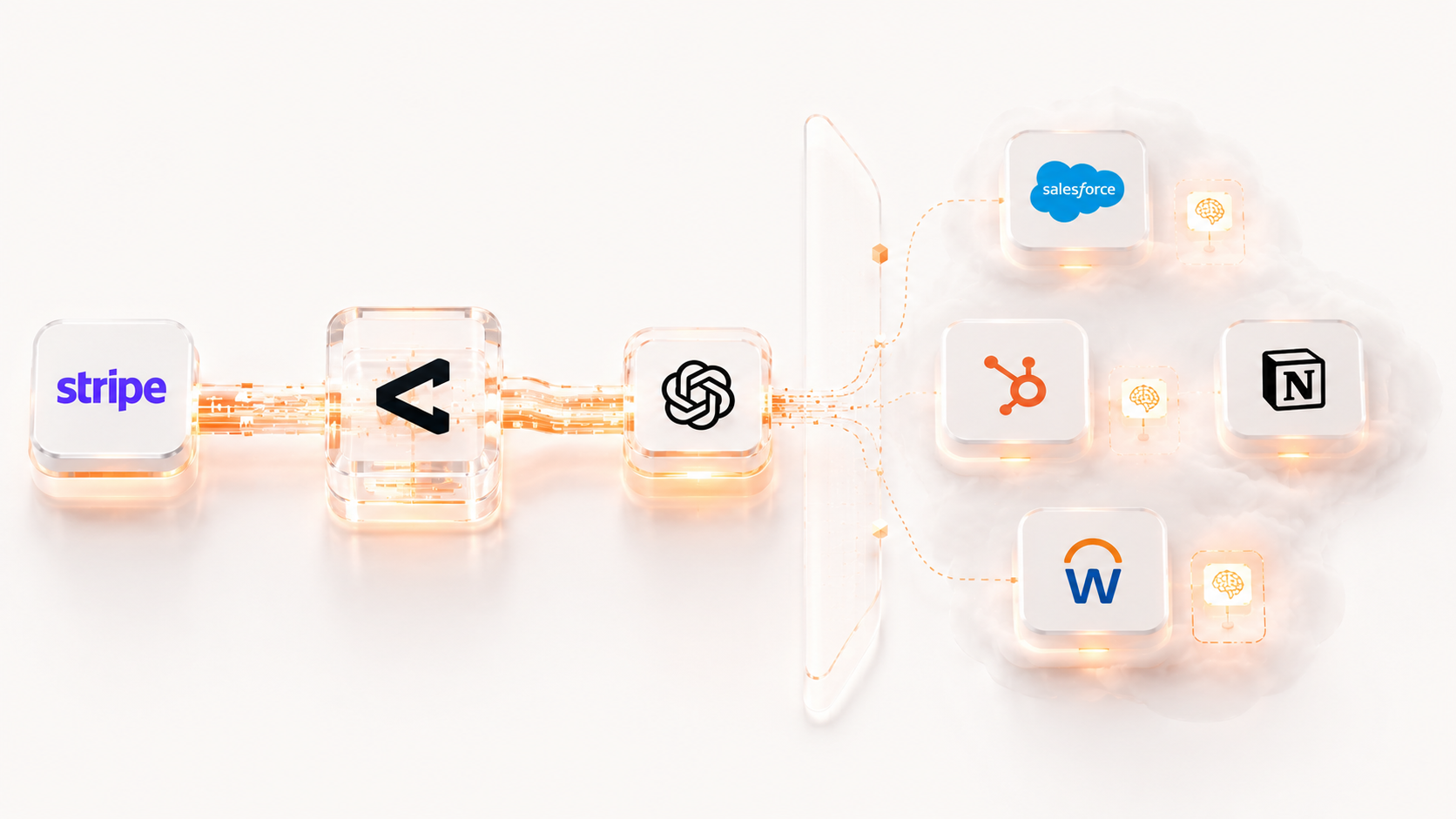
That's the short answer to what's become the fastest-moving story in AI infrastructure this month: what does Stripe buying OpenRouter actually mean for AI costs? It means the metered, API-billed side of AI spend just got a very powerful accountant. It does nothing for the much larger pile of AI spend that never touches an API meter at all.
The deal, in numbers
On August 16, Bloomberg confirmed Stripe had finalised a deal to acquire OpenRouter for more than $7 billion. OpenRouter had raised a $113 million Series B just three months earlier, in May, at a $1.3 billion valuation. That's roughly a 5.4x markup in under 100 days, for a company that, by its own account, doesn't build models at all. It routes requests to them.
OpenRouter gives developers one connection point to more than 400 models from over 60 providers, and claims 8 million users. Ask it to route a request and it picks the model, tracks the cost, and hands back a bill. Its own CEO has called it "Stripe for AI." Now it just is Stripe for AI, literally.
This isn't Stripe's first move here. It bought usage-based billing company Metronome back in January. Metronome answers how much a request costs and how it should be billed. OpenRouter answers which model should handle it in the first place. Put together, Stripe now owns both ends of the metering pipe: which model, what it costs, how it's invoiced.
What Stripe can see
Every dollar that flows through that pipe is now visible to one company, in real time, at the token level. That's a genuine capability. If your engineering team calls GPT, Claude, Gemini, or a dozen open-weight models through an API and pays per token, Stripe now has a direct line into that spend, down to the request.
Call this the transaction layer. It's the part of AI spend that looks like classic Stripe: metered, itemized, billed by usage. Naturally, it's the part a payments company would want to own first.
What Stripe can't see
Here's the gap. Most companies aren't only running raw API calls. They're paying for AI that's already baked into the software they already own. Salesforce charges extra for Einstein. HubSpot bundles AI credits into its higher tiers. Notion, Zoom, and half the tools in a typical stack now have an AI add-on line buried somewhere in the renewal.
None of that spend is metered by the token. It's priced by seat, by tier, or by a flat add-on fee negotiated once a year and then forgotten. It shows up on an invoice from a SaaS vendor, not from an AI router. Stripe's new acquisition has no visibility into it, because there's no API call to route.
A CNBC investigation published in July found that Chinese-origin models were already capturing 46% of US enterprise token usage on OpenRouter, a fact that adds a layer of regulatory complexity to Stripe's new business. But the more immediate problem for most finance and IT teams isn't which model answered a request. It's that nobody can say, with confidence, how many AI features they're already paying for inside contracts they signed for something else entirely.
The line this deal actually draws
Stripe and OpenRouter just built better plumbing for the transaction layer: what a model costs to run, per call, per token. That's useful and worth billions to the right buyer. But it's not the same thing as ownership. Nobody at these companies is deciding which AI tools a team should keep, which renewals are duplicative, or who signed off on an Einstein upgrade nobody uses.
That's the policy layer, and it's still wide open. It's not a metering problem. It's a mapping problem: knowing what AI is running where, inside which contract, approved by whom, and whether it's worth renewing.
This is where a tool like ELI comes in. ELI maps your entire software stack, including the AI features quietly riding along inside tools you already pay for, and flags what's duplicated, unused, or up for renewal before finance finds out the hard way. Stripe can tell you what a token costs. ELI tells you whether you should be paying for it at all.
The transaction layer just got a $7 billion upgrade. The policy layer is still nobody's job. That's the opening, and it's not going to stay open for long.